
Lesson 1.7: 1.7 Patterns and Computational Thinking and Discussion Questions
- View
Chapter 1 · Lesson 7 of 8 · About 14 minutes
Learning objectives Extra Practice
- Identify a pattern in numbers, shapes or events and explain why it is a pattern.
- Describe, extend and create triangular, square, cube, doubling and Virahanka (Fibonacci‑style) numbers.
- Find connections between patterns, Pascal's Triangle and the golden ratio.
- Represent patterns with dots, grids, tables or charts.
- State a pattern's rule using both a term‑to‑term rule and a position‑to‑term rule.
- Connect pattern recognition to the four‑step computational thinking process: Observe, Identify, Predict, Verify.
- Recognise a pattern in numbers, shapes, or events and explain why it is a pattern.
- Describe, extend, and create triangular, square, cube, doubling, and Virahanka numbers.
- Discover connections between patterns, Pascal's Triangle, and the golden ratio.
- Represent patterns with dots, grids, tables, or charts.
- State a pattern's rule using term‑to‑term and position‑to‑term language and link this to computational thinking.
Getting started
Patterns are everywhere — from the tiles on a floor to the numbers hidden inside Pascal's Triangle. In this lesson you will learn to recognise, describe, extend and create number patterns, write their rules in words, and see how the same thinking steps power modern computers and artificial intelligence.
Lesson Extra Practice
1. What Is a Pattern?
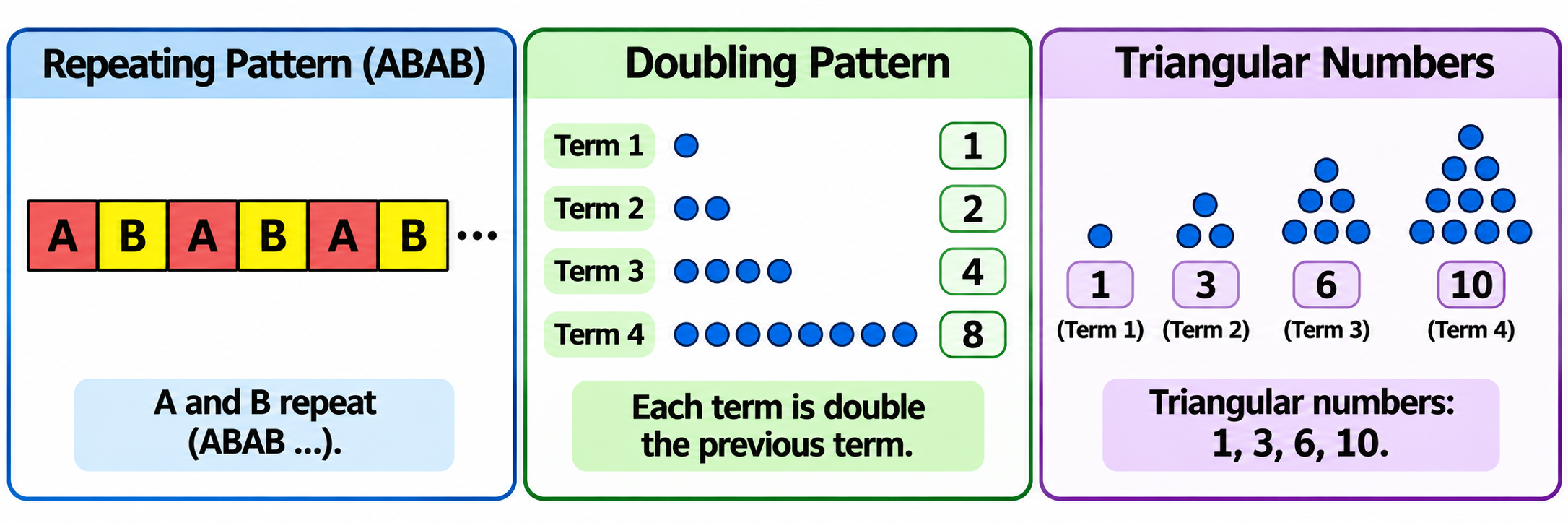
A pattern is something that repeats or grows in a predictable way. Mathematicians and computer scientists care about patterns because a predictable rule lets us jump to any term without listing all the previous ones.
- Repeating patterns: ABABAB…
- Growing patterns: 2, 4, 8, 16… (doubling)
- Shape patterns: square made of dots, triangle made of dots
Image prompt 1: Section 1 after definition of pattern
2. Number Patterns We Have Met
Below are the five classic number patterns studied earlier in the chapter. Each can be shown with dots, a table or a simple chart.
| Pattern | First 5 terms | Term‑to‑term rule | Position‑to‑term rule |
|---|---|---|---|
| Triangular numbers | 1, 3, 6, 10, 15 | Add the next natural number | n(n+1)/2 |
| Square numbers | 1, 4, 9, 16, 25 | Add the next odd number | n² |
| Cube numbers | 1, 8, 27, 64, 125 | Add 3n²+3n+1 | n³ |
| Doubling pattern | 1, 2, 4, 8, 16 | Multiply by 2 | 2ⁿ⁻¹ |
| Virahanka (Fibonacci) numbers | 1, 1, 2, 3, 5 | Add the two previous terms | No simple closed form |
Finding the 10th triangular number Extra Practice
Problem: Use the position‑to‑term rule to find the 10th triangular number.
Solution:
- Rule: Tₙ = n(n+1)/2
- Substitute n = 10 → 10 × 11 / 2
- Calculate: 110 / 2 = 55
Answer: 55
3. From Patterns to Rules
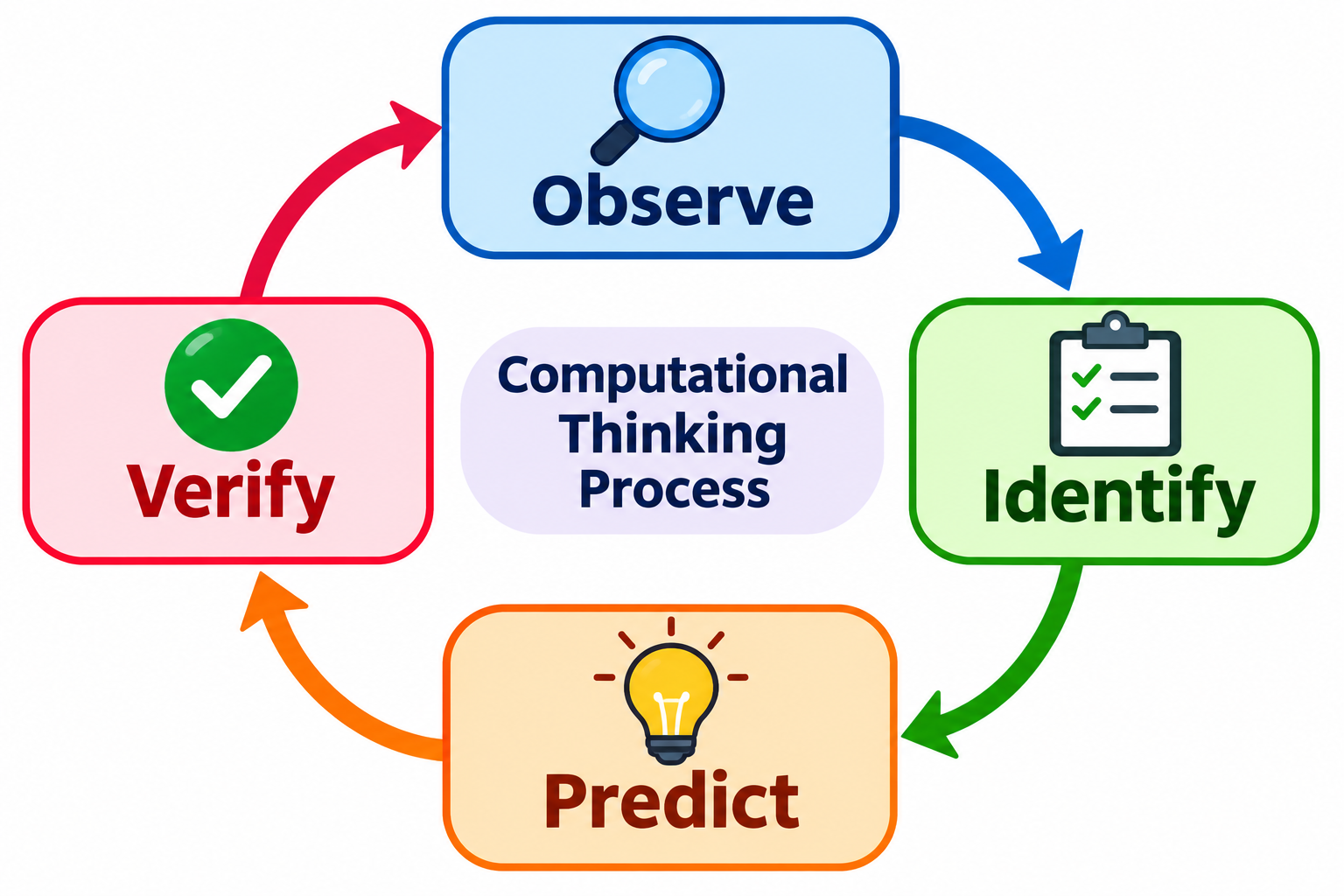
Writing a rule in words lets anyone — a classmate or a computer — continue the pattern without seeing every term. Two useful forms are the term‑to‑term rule (how to get the next term) and the position‑to‑term rule (direct formula for the nth term).
- Observe: look at the given terms or shapes.
- Identify: spot what changes and what stays the same.
- Predict: write the rule and use it to find a new term.
- Verify: check the prediction against the pattern.
Image prompt 3: Section 3 after the four-step list
4. Patterns Inside Pascal's Triangle and the Golden Ratio
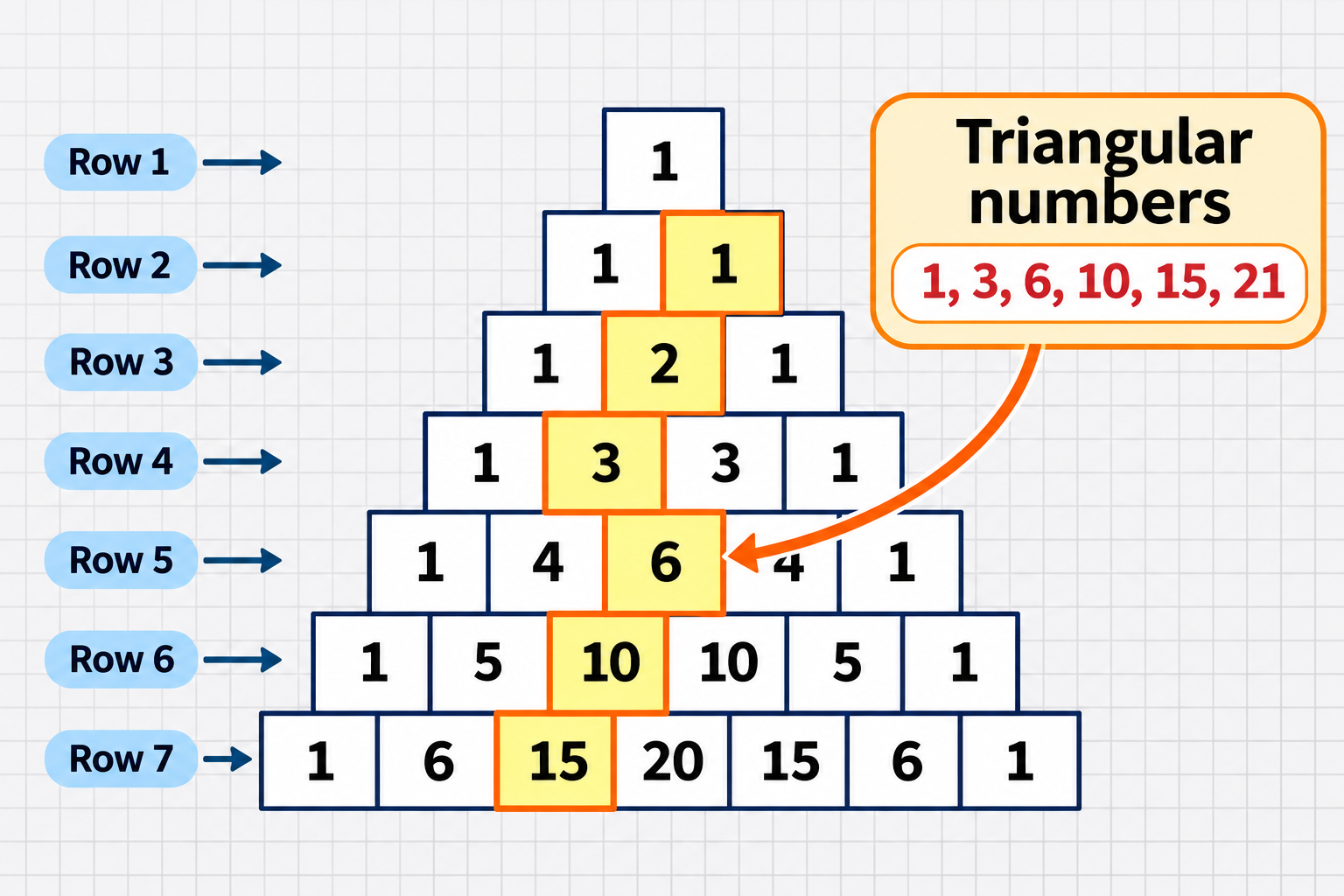
Triangular numbers appear as the third diagonal of Pascal's Triangle. The Virahanka numbers, when divided term by term, approach the golden ratio (≈1.618). These hidden links show how one pattern can live inside another.
- Third diagonal of Pascal's Triangle = 1, 3, 6, 10, 15 … (triangular numbers)
- Ratio of consecutive Virahanka terms → 1.618… (golden ratio)
Image prompt 2: Section 4 after mention of Pascal's Triangle
5. Pattern Recognition and Computational Thinking
The four‑step process — Observe, Identify, Predict, Verify — is an algorithm. When a machine learning system sorts emails into spam or not‑spam, it follows the same steps: it observes many examples, identifies a rule, predicts the label for a new email, and verifies its accuracy. Recognising patterns in numbers trains the same habit used in artificial intelligence.
- Decomposition: break a sequence into “what changes” and “what stays the same”.
- Abstraction: use n² to jump to the 50th square number.
- Algorithmic thinking: follow Observe‑Identify‑Predict‑Verify for any pattern problem.
Understanding Patterns
A pattern is a sequence that follows a rule. The rule can be described term‑to‑term (how to get the next term) or position‑to‑term (a formula for the nth term).
- Triangular numbers
- Square numbers
- Cube numbers
- Doubling pattern
- Virahanka (Fibonacci‑style) numbers
| Pattern | First 5 Terms | Term‑to‑Term Rule |
|---|---|---|
| Triangular | 1, 3, 6, 10, 15 | Add the next integer |
| Square | 1, 4, 9, 16, 25 | Add the next odd number |
| Cube | 1, 8, 27, 64, 125 | Multiply by the next integer squared |
| Doubling | 1, 2, 4, 8, 16 | Multiply by 2 |
| Virahanka | 1, 1, 2, 3, 5 | Add the two previous terms |
Discussion Questions
The chapter ends with five discussion questions. Each question has a hint to guide reasoning.
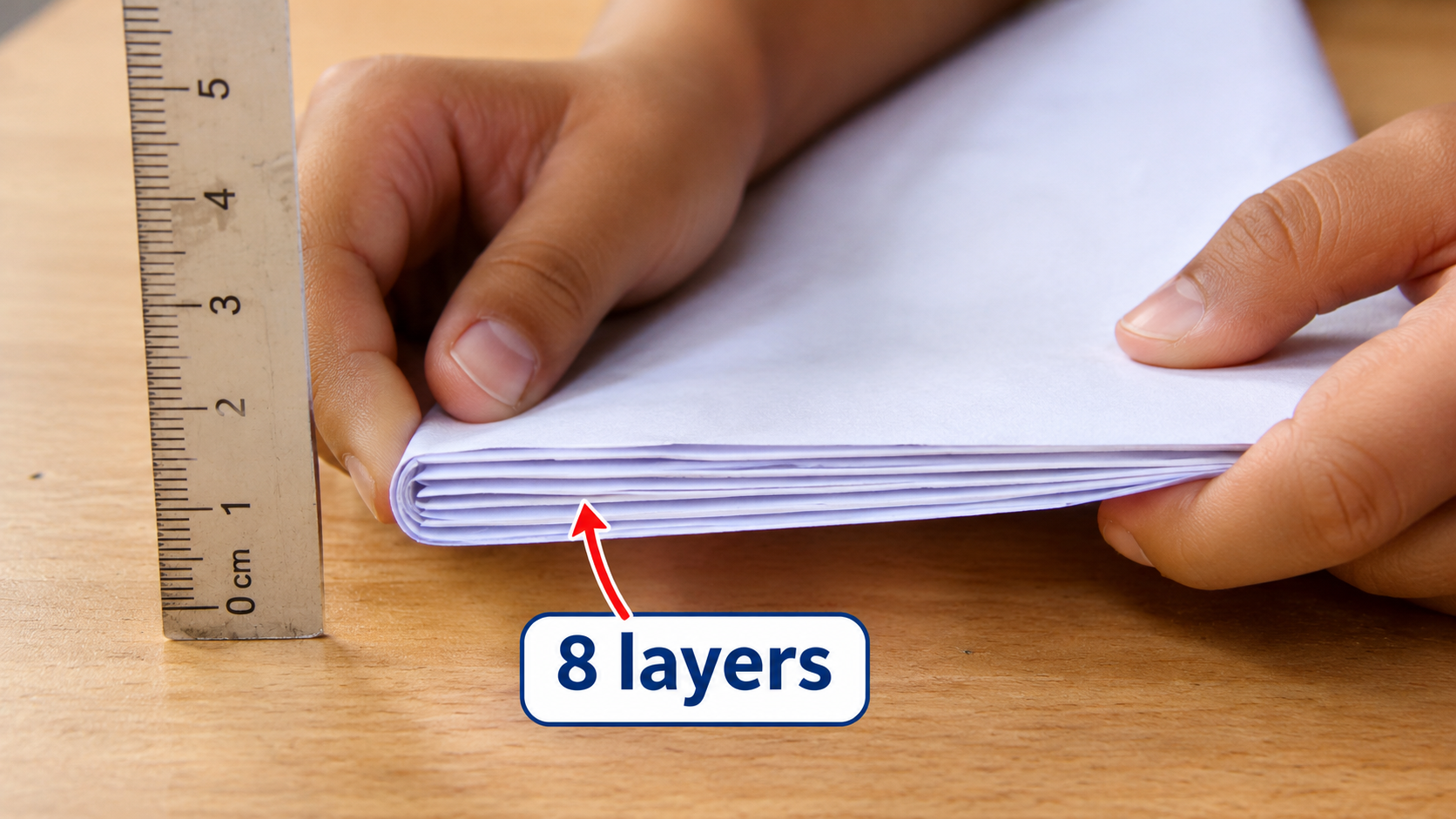
- Paper folding: why does doubling layers become impossible after 7‑8 folds?
- Rangoli symmetry: why do symmetry and repetition look pleasing?
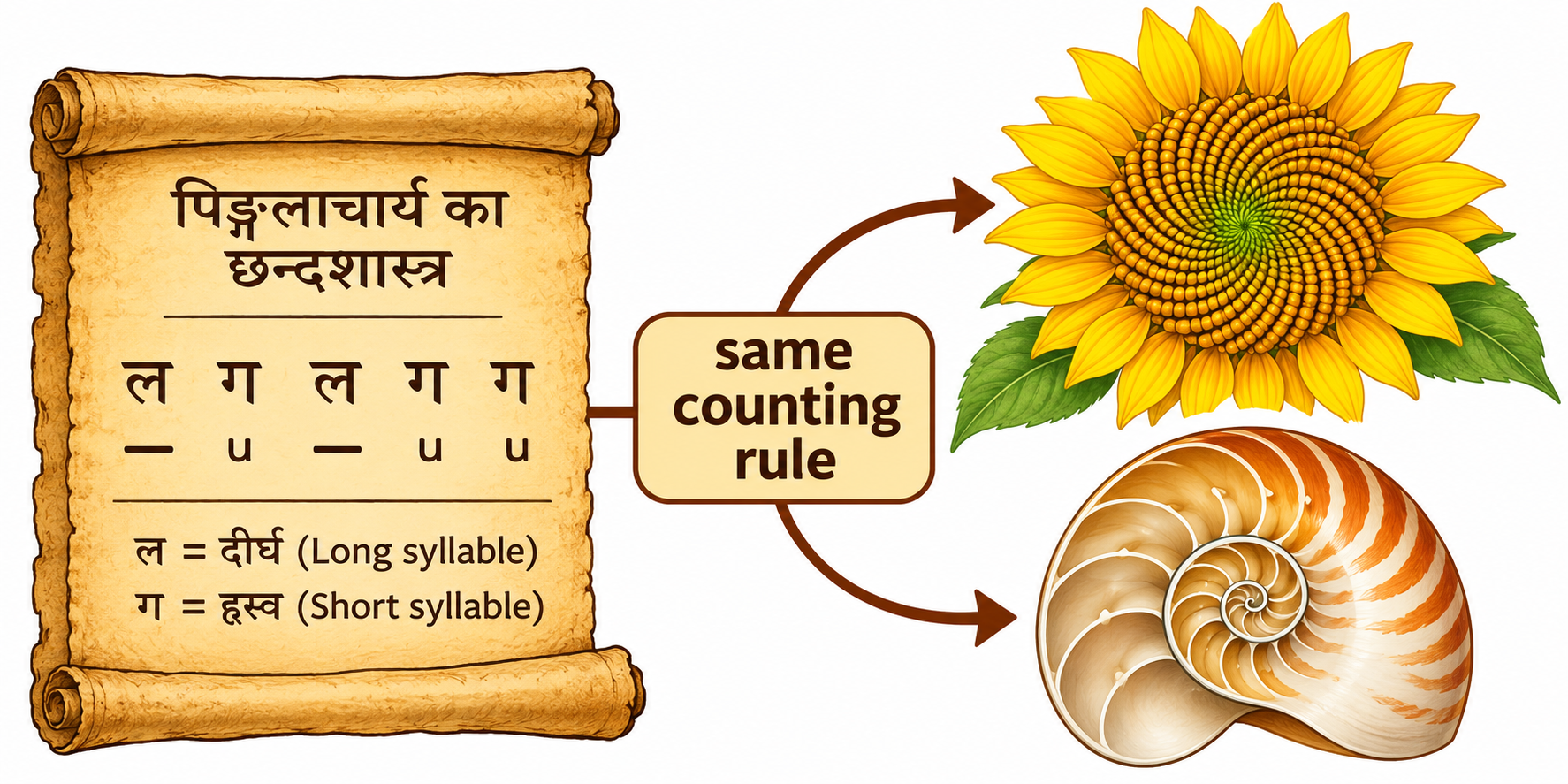
- Virahanka in nature: why does the same pattern appear in poetry, petals, and shells?
- Alternative rule for 2, 4, 8: could the rule be something other than doubling?
- Computer handwriting recognition: how is it similar to finding triangular or square number rules?
Alternative Rule for 2, 4, 8 Extra Practice
Problem: Given the first three terms 2, 4, 8, find a rule different from doubling that also fits.
Solution:
- Assume a quadratic rule term n = an² + bn + c.
- Set up equations: a + b + c = 2; 4a + 2b + c = 4; 9a + 3b + c = 8.
- Solve to get a = 1, b = -1, c = 2.
- The rule term n = n² – n + 2 produces 2, 4, 8, 14, …
Answer: One alternative rule is term n = n² – n + 2, which gives 2, 4, 8, 14, …
Image prompt 4: section 'Discussion Questions' after the alternative rule example
Classroom Conversation
The teacher guides students to see that the same counting rule appears in poetry, flowers, and shells.
- Virahanka studied arrangements of long and short syllables — a counting rule.
- Flowers and shells follow the rule because it gives efficient packing or steady growth.
- The pattern is not about poetry or biology; it is a fundamental counting rule.
Image prompt 5: section 'Classroom Conversation' after the bullet list
Pattern Thinking and Computational Thinking
Both humans and computers use a four‑step process to spot patterns.
- Observe the data carefully.
- Identify a possible rule.
- Predict the next terms using the rule.
- Verify the prediction against new data.
- This process mirrors how a machine‑learning model is trained on thousands of handwriting samples.
- The model observes, identifies features, predicts digits, and verifies accuracy.
Hands‑On Activity: Paper Folding
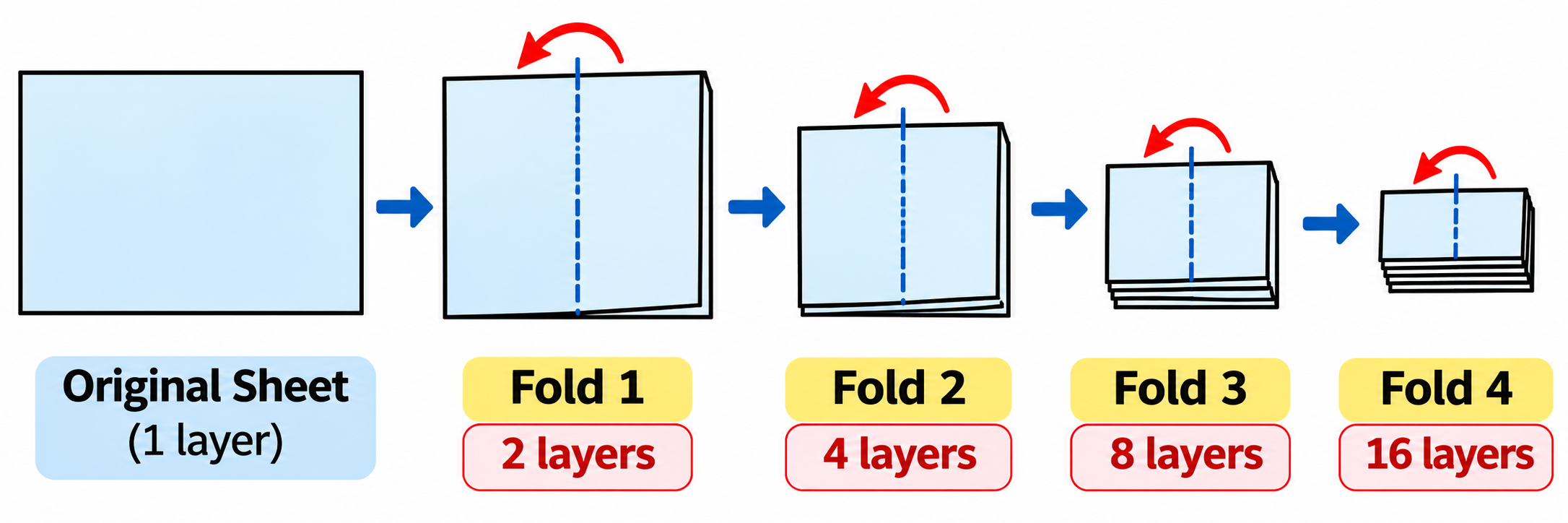
Folding a sheet of paper repeatedly shows the doubling pattern and its physical limits.
- Take a standard A4 sheet.
- Fold in half, count the layers (2).
- Repeat folding, recording layers each time (4, 8, 16, …).
- Stop when folding becomes impossible; note the number of folds.
Image prompt 6: section 'Hands‑On Activity: Paper Folding' after the numbered steps
Teacher–student conversation Extra Practice
Teacher: Look at the sequence 2, 4, 8, 16. What do you notice?
Student: Each term is double the previous one.
Teacher: Exactly. That is the term‑to‑term rule. Can you write the position‑to‑term rule?
Teacher: If we want the 7th term without listing all six before it, what do we do?
Student: Use 2ⁿ⁻¹ with n = 7, so 2⁶ = 64.
Teacher: Well done. That is abstraction — jumping straight to the answer.
Teacher: Let us look at Question 3 together. Why do you think a pattern discovered in poetry also shows up in flowers and shells?
Student: Maybe it is just a coincidence, Ma'am? Poetry, flowers, and shells have nothing to do with each other.
Teacher: That is a fair first thought. But when Virahanka studied poetry, was he studying words, or was he studying something else?
Teacher: He was studying the number of ways long and short syllables could be arranged, so really, he was studying a counting rule.
Student: And when a sunflower grows seeds, or a shell adds a new layer of growth, is it thinking about poetry at all?
Teacher: No, obviously not! It is just growing in whatever way uses space most efficiently, or adds material at a steady proportion.
Teacher: So the flower is not copying the poem, and the poem is not copying the flower. What does that tell you about the number pattern itself?
Student: That the pattern is not really “about” poetry or flowers at all — it is just a rule of counting, and poetry, flowers, and shells all happen to follow that same rule for their own separate reasons.
Teacher: Beautifully reasoned. This is exactly why mathematicians get excited when the same pattern turns up in several completely unrelated places — it usually means they have found something fundamental, not a coincidence.
Real-world connections Extra Practice
- Sunflower seed spirals follow Virahanka numbers.
- Traffic lights use repeating colour patterns.
- Email spam filters learn patterns from many examples.
- Handwriting recognition software spots stroke patterns.
- Sunflower seed spirals follow Virahanka numbers for optimal packing.
- Traffic light timing uses repeating patterns to coordinate flow.
- Computer vision systems learn patterns from thousands of images to recognise objects.
Build Triangular Numbers with Counters Extra Practice
- Place 1 counter, then add a row of 2, then a row of 3, … up to 6.
- Count the total after each row and record the sequence.
- Write the term‑to‑term rule and the position‑to‑term rule.
Materials: Counters or buttons, paper, pencil
Create Your Own Number Pattern Extra Practice
- Choose a starting number and a simple rule (e.g., add 3, multiply by 2).
- Generate the first six terms.
- Swap with a partner and ask them to identify the rule.
Materials: Paper, pencil
Create a Rangoli Design Extra Practice
- Draw a central point on graph paper.
- Choose a simple motif (e.g., a triangle).
- Repeat the motif by rotating 90° around the centre four times.
- Add a second layer by scaling the motif and repeating.
- Discuss how symmetry makes the design predictable and pleasing.
Materials: Graph paper, pencil, ruler, coloured pencils
Important points to remember Extra Practice
- A pattern repeats or grows predictably.
- Term‑to‑term rules describe the step; position‑to‑term rules give a direct formula.
- Triangular, square, cube, doubling and Virahanka numbers are classic examples.
- Triangular numbers appear in Pascal's Triangle; Virahanka ratios approach the golden ratio.
- Observe‑Identify‑Predict‑Verify is an algorithm used in computational thinking and AI.
- A pattern follows a predictable rule that can be described term‑to‑term or position‑to‑term.
- Triangular, square, cube, doubling, and Virahanka numbers are classic number patterns.
- The same mathematical rule can appear in unrelated contexts — poetry, biology, art.
- The Observe‑Identify‑Predict‑Verify cycle is used by both learners and AI systems.
- Physical limits (paper thickness) show that mathematical growth can outpace real‑world constraints.
Lesson summary Extra Practice
In this lesson you learned to spot, describe and extend number patterns, write their rules in two ways, discover hidden connections in Pascal's Triangle and the golden ratio, and see how the same four‑step thinking process powers modern computers. Practising these skills builds the foundation for both higher mathematics and artificial intelligence.
This lesson explored what makes a pattern, examined five classic number patterns, discussed why the same rule appears in poetry, flowers, and shells, linked pattern thinking to computational thinking, and provided hands‑on folding and Rangoli activities to experience patterns directly.
Teacher review note
All content is drawn from the supplied source. No external facts were added. The lesson fits a 40‑minute middle‑school period; adjust activity time as needed.
AI-generated learning material based on the uploaded source. Please review explanations, examples and assessments before assigning this lesson to students.